Observing, Defining, and Improving the Dance Education System – Using Systems Thinking in Service Design for Art and Business
Role — Service Designer
Time — Winter 2026
Dance Education: a convergence of art, people, and business
Why this system?
Dance Education is a complex system comprised of both business and artistry.
I have been a dancer all my life. I grew up dancing at a studio, went off to compete on my college dance team, and now am teaching at the studio I grew up at. Having both the dancer and teacher perspectives has given me unique insight into the experience of the frontend and backend of running a studio.
In association with the AI-Enabled Systems Design class taught by Morgan Denner at TechFleet, I was tasked with choosing a system to document and design for. Doing so was a no-brainer.
Defining the System
What is Dance Education?
Any system is comprised of it’s services, products, environments, people, and events. All of these components interact and result in unique interactions and decisions.
Services
Dance Technique Classes,
Competition Team,
Recitals / Performances
People
Dancers,
Parents,
Teachers,
Directors,
Staff,
Family & Friends
Interactions
Teaching Students,
Giving Feedback,
Communicating with Parents,
Paying Bills,
Enrolling in Class,
Asking Questions,
Attending Perfomances
Products
Studio Management System,
Parent App,
Communication Apps,
Apparel,
Shoes,
Phones,
Email,
Music,
Audio Equipment,
Costumes,
Cameras
Decisions
Choreography,
Curriculum,
Songs,
Pricing,
Budget,
Schedule,
Enrollment,
Placement,
Choosing a Studio,
Ticket Buying,
Classes,
Placing Levels
Environments
Dance Rooms,
Lobby,
Office,
Theater,
Front of House,
Backstage,
On Stage
Events
Classes,
Enrollment,
Recitals,
Rehearsals,
Auditions,
Competitions,
Parent Meetings,
Staff Meetings
Identifying and understanding key audience segments
People in systems have motivations and life goals that influence system goals. By understanding their system goals, we can discover pain points and better tailor solutions.
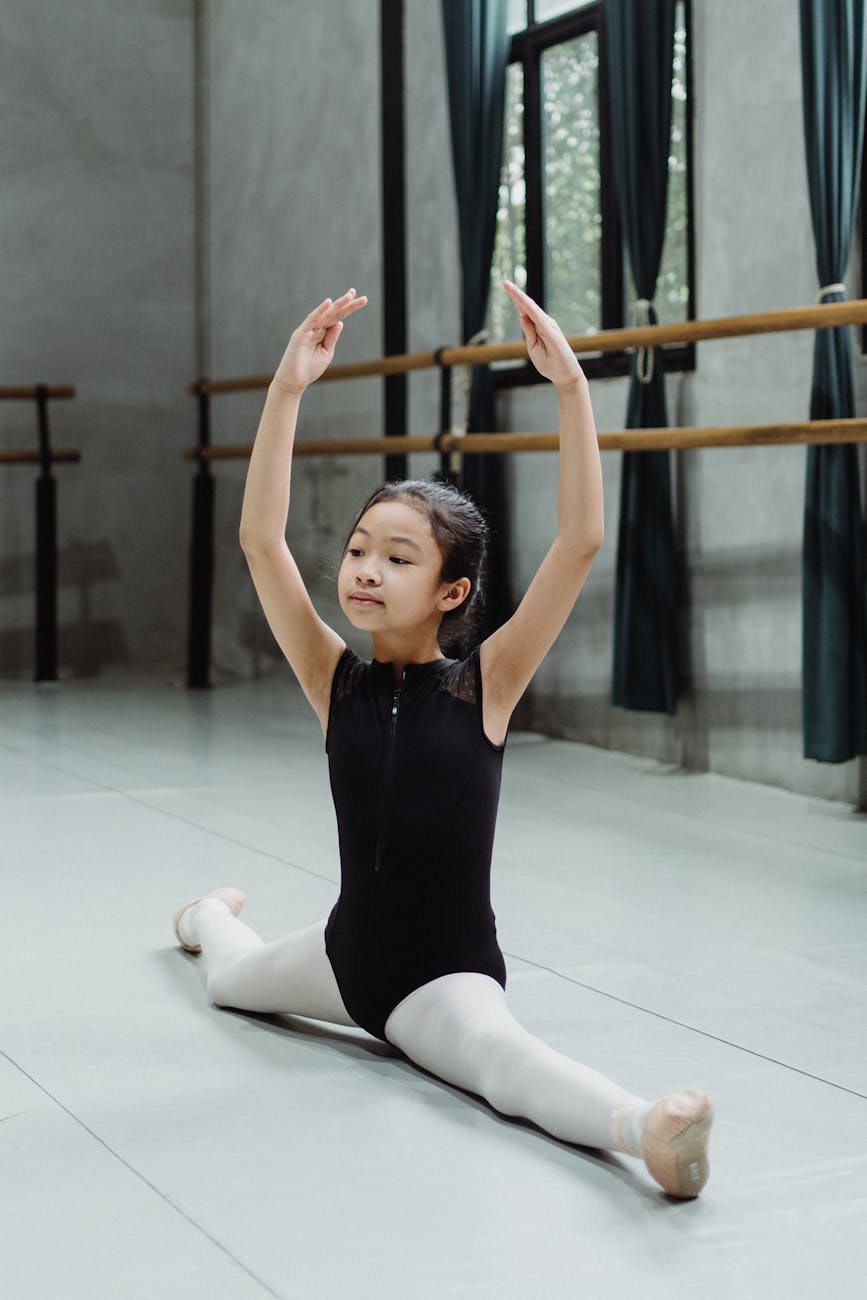
Dancers
- Improve in technique
- Learn discipline and mental skills for their future
- Be praised by teachers, parents, and peers
- Perform as well as or better than their peers
- Distract from stress
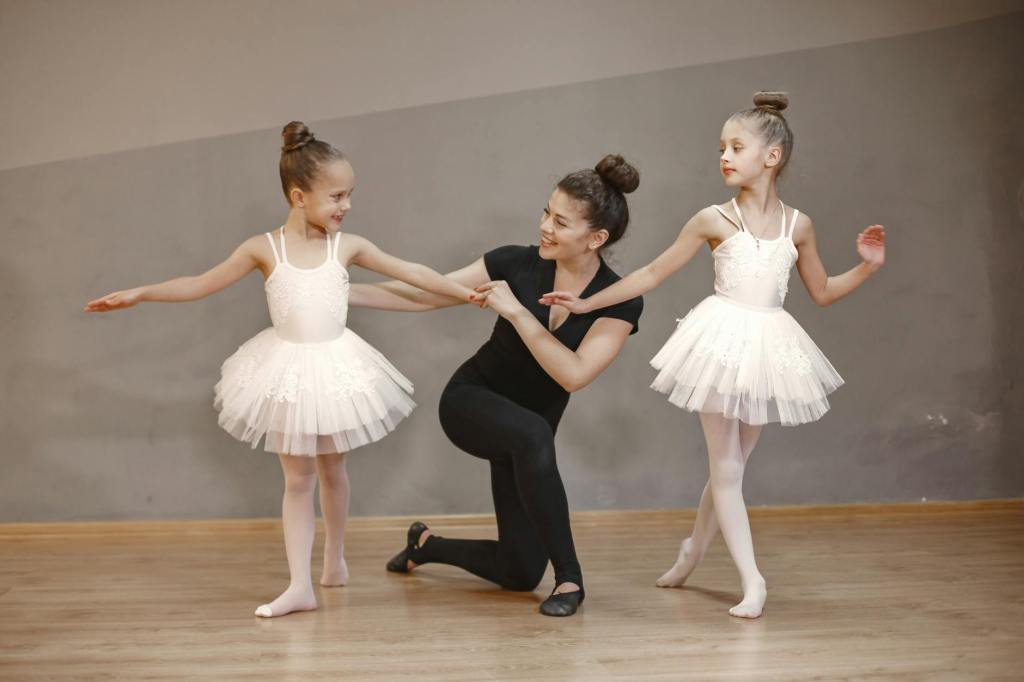
Teachers
- Stay up-to-date on dance trends and standards
- Secure consistent jobs
- Develop students who are recognized for technique and talent
- Prepare students for the dance world
- Help students meet goals
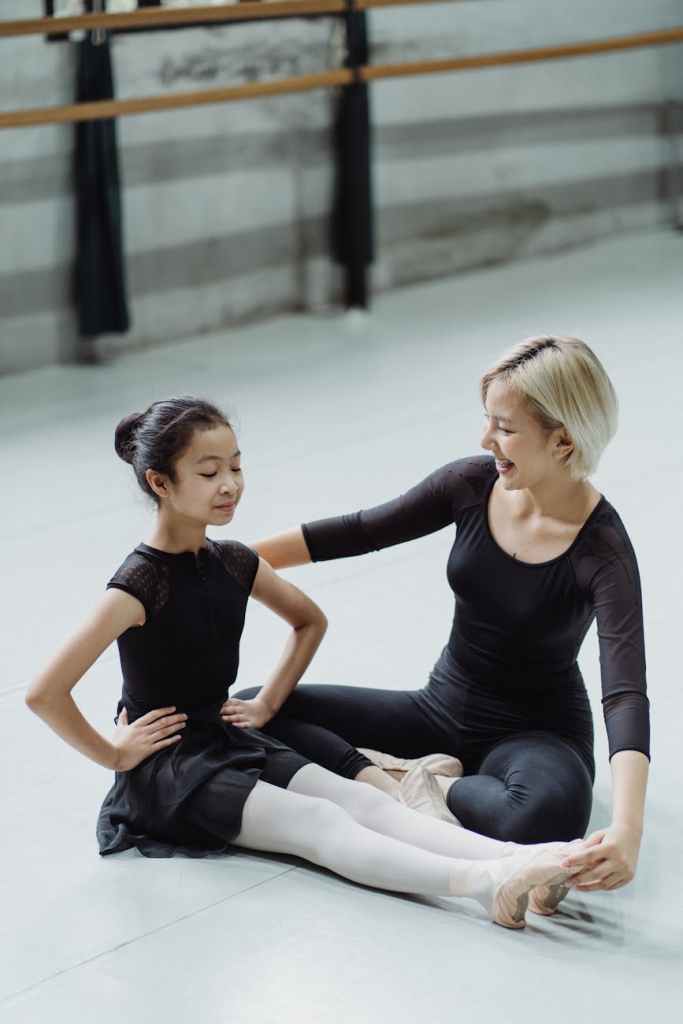
Directors
- Build a recognizable studio brand
- Mentor staff and teachers
- Develop talented students that are ready for the dance world
- Stay up-to-date on dance trends and standards
- Maintain loyal clients
Parents
- Find the best activities for their child’s physical and mental development
- Mentor their child in responsibility and independence
- Give their child an artistic outlet
- Afford their child’s extracurricular activities
- Take their child to their activities

The Parent Experience
Choosing this Audience
Parents are crucial to the Dance Education economy.
Though dancers wouldn’t know much without their teachers, and directors would have no help without staff, parents are the decision makers in the Dance Education System.
1
Parents logistically support child’s dance education
2
Parents’ funds make the dance studio a business
The Current Parent Experience
By detailing the parent experience with a Customer Experience (CX) map, I am better able to understand important, events, decisions, and interactions from Awareness to Loyalty.

Pain Points and Opportunities
Common Pain Points
In order to understand where parents could find improvement in their experience, I devised an assumptive list of pain points based on common complains I have heard from parents as a teacher and a dancer.
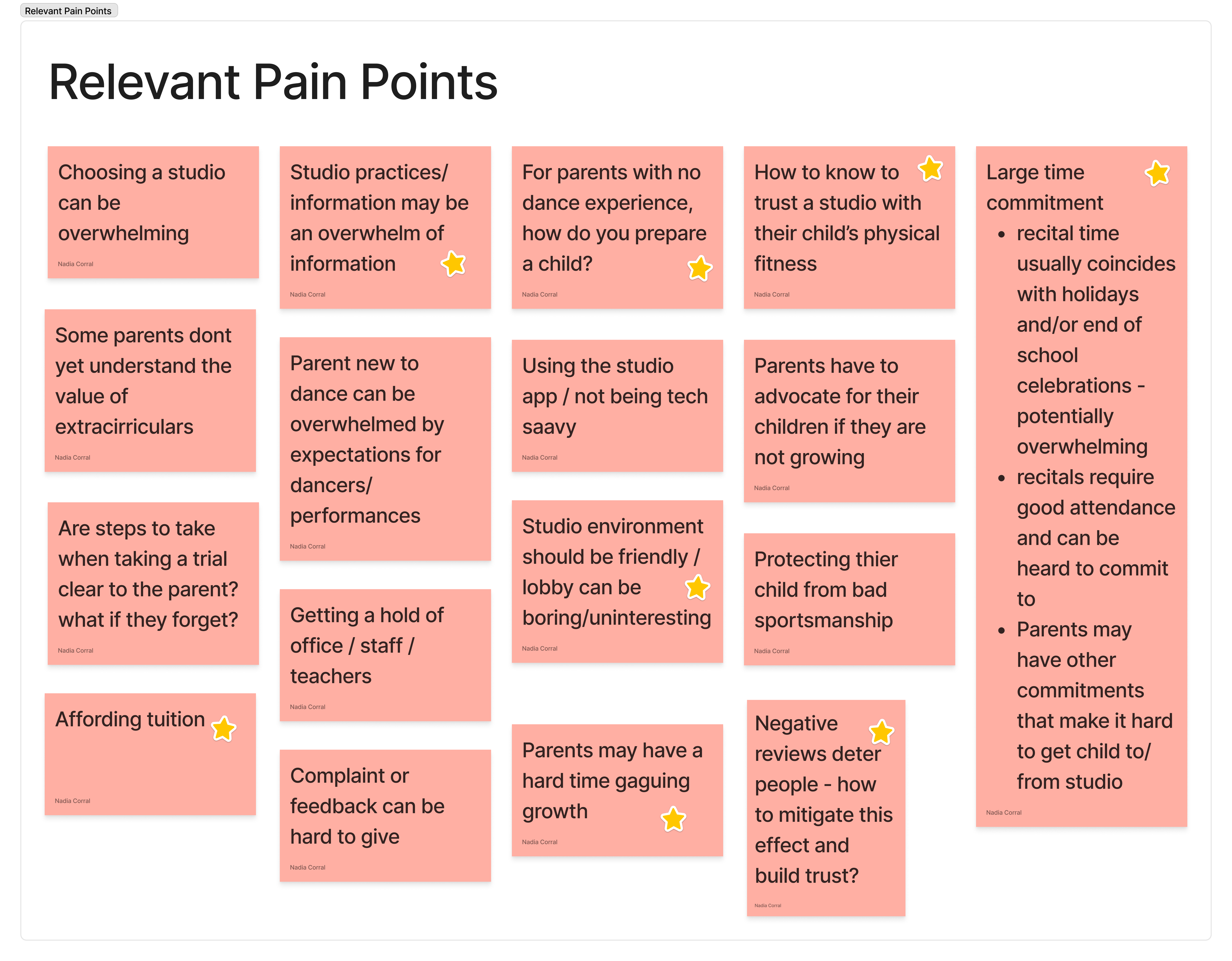
- Overwhelming amount of information and options.
- Negative reviews and lack of trust in online presence.
- Intimidating registration and liability forms.
- Boring or unwelcoming lobby environments.
- Difficulty in gauging child’s growth and progress.
Opportunities for Improvement
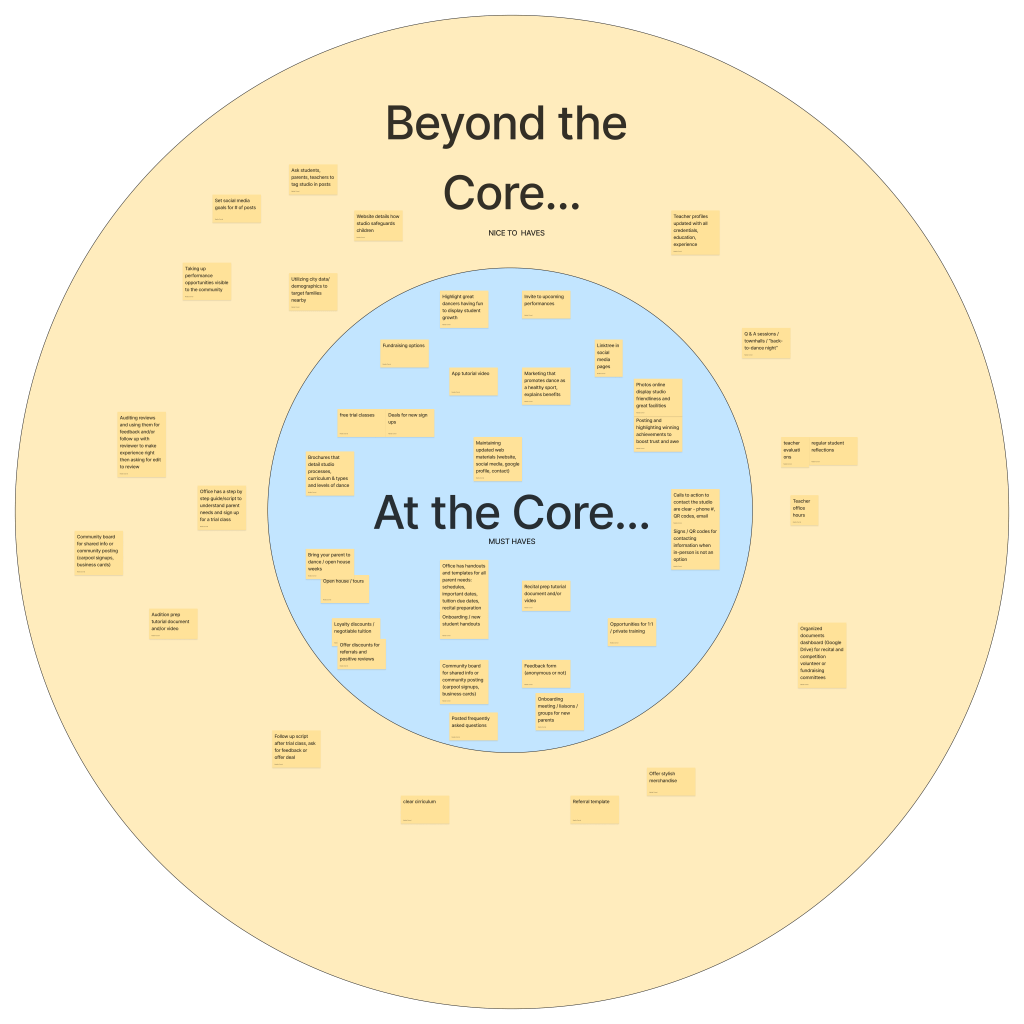
- Simplify and streamline information delivery.
- Enhance online presence and manage reviews effectively.
- Make registration processes more user-friendly.
- Create engaging, informational, and comfortable lobby spaces.
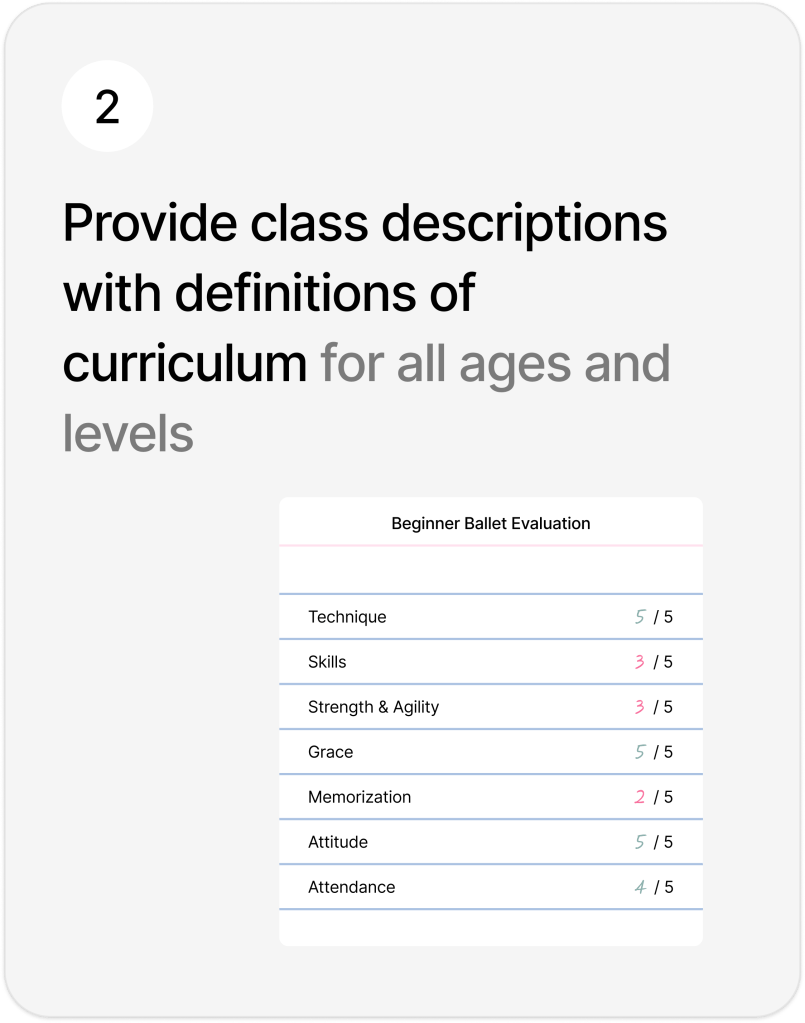
- Provide clear metrics for tracking child development.
Problems to Tackle
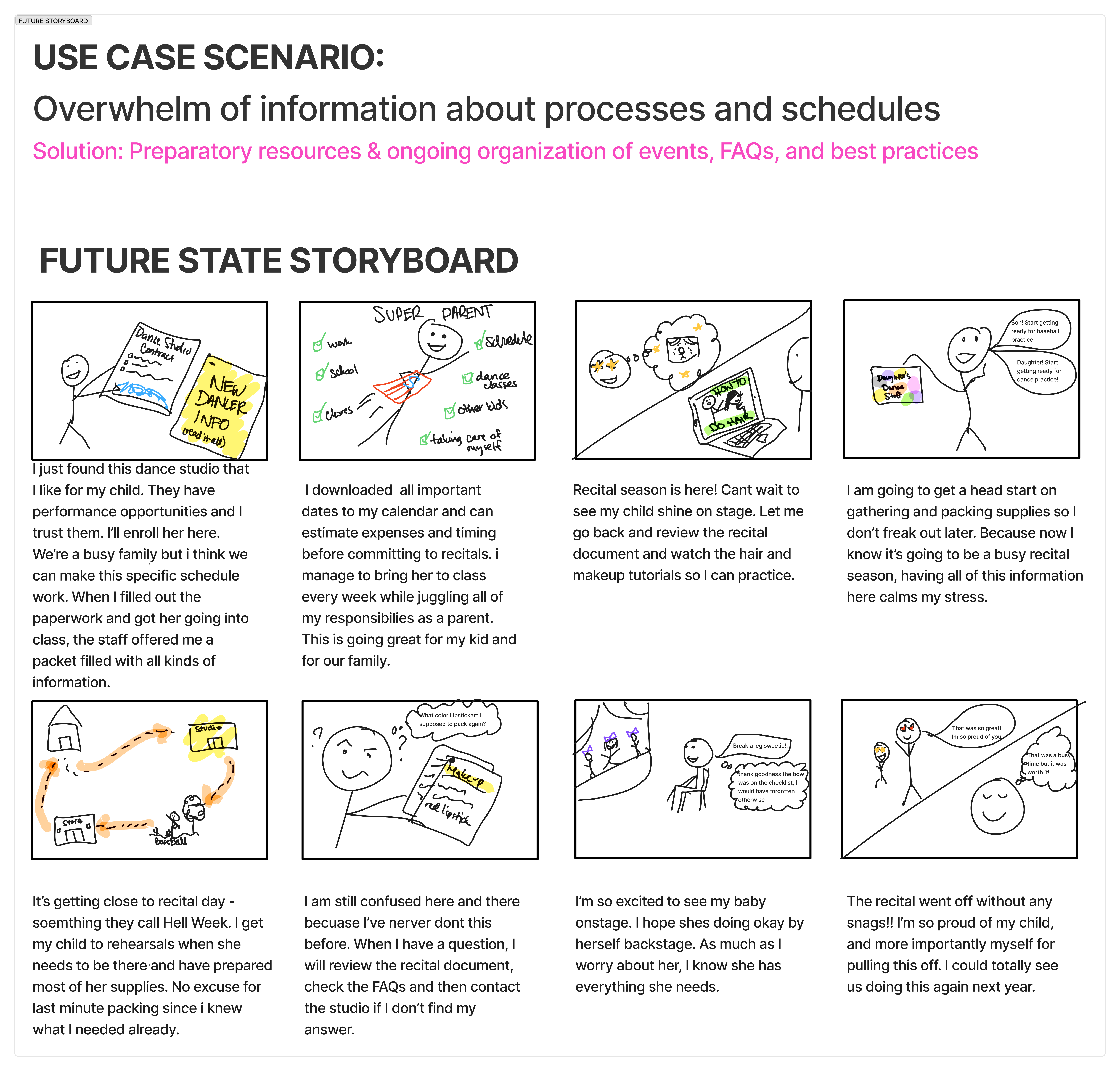
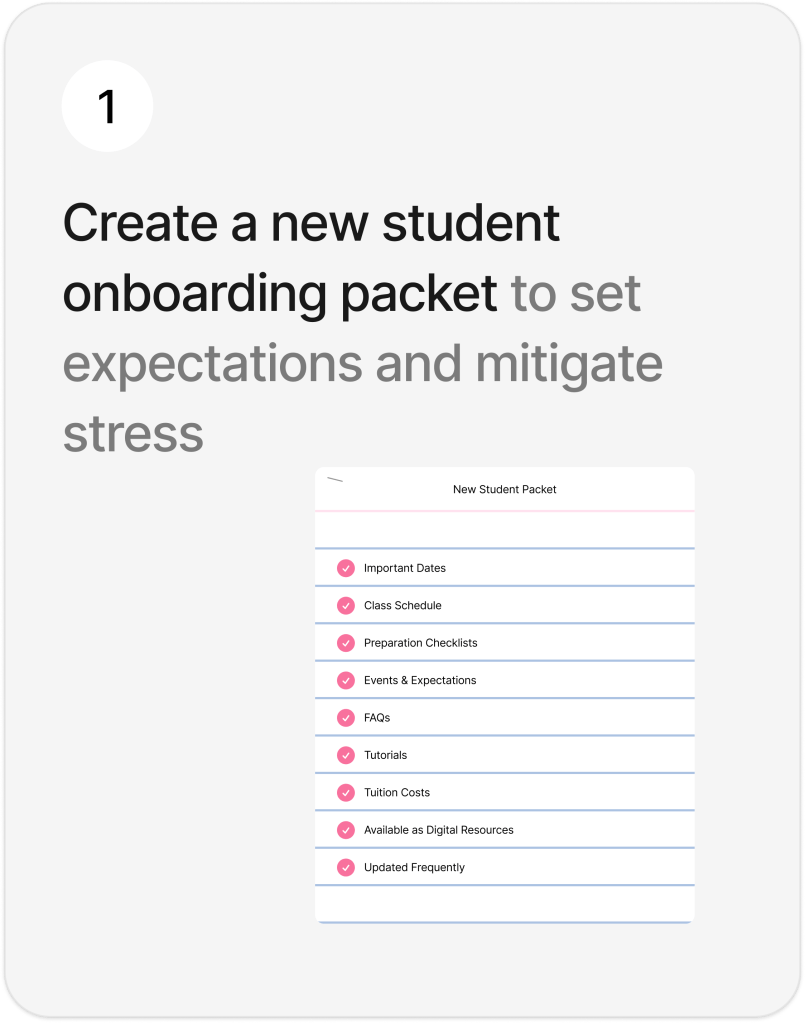
Overwhelm of Information
When struggling with overwhelm, parents will want tasks to be the following:
- Clear
- Thorough
- Upfront
- Organized
- Updated
- Easy
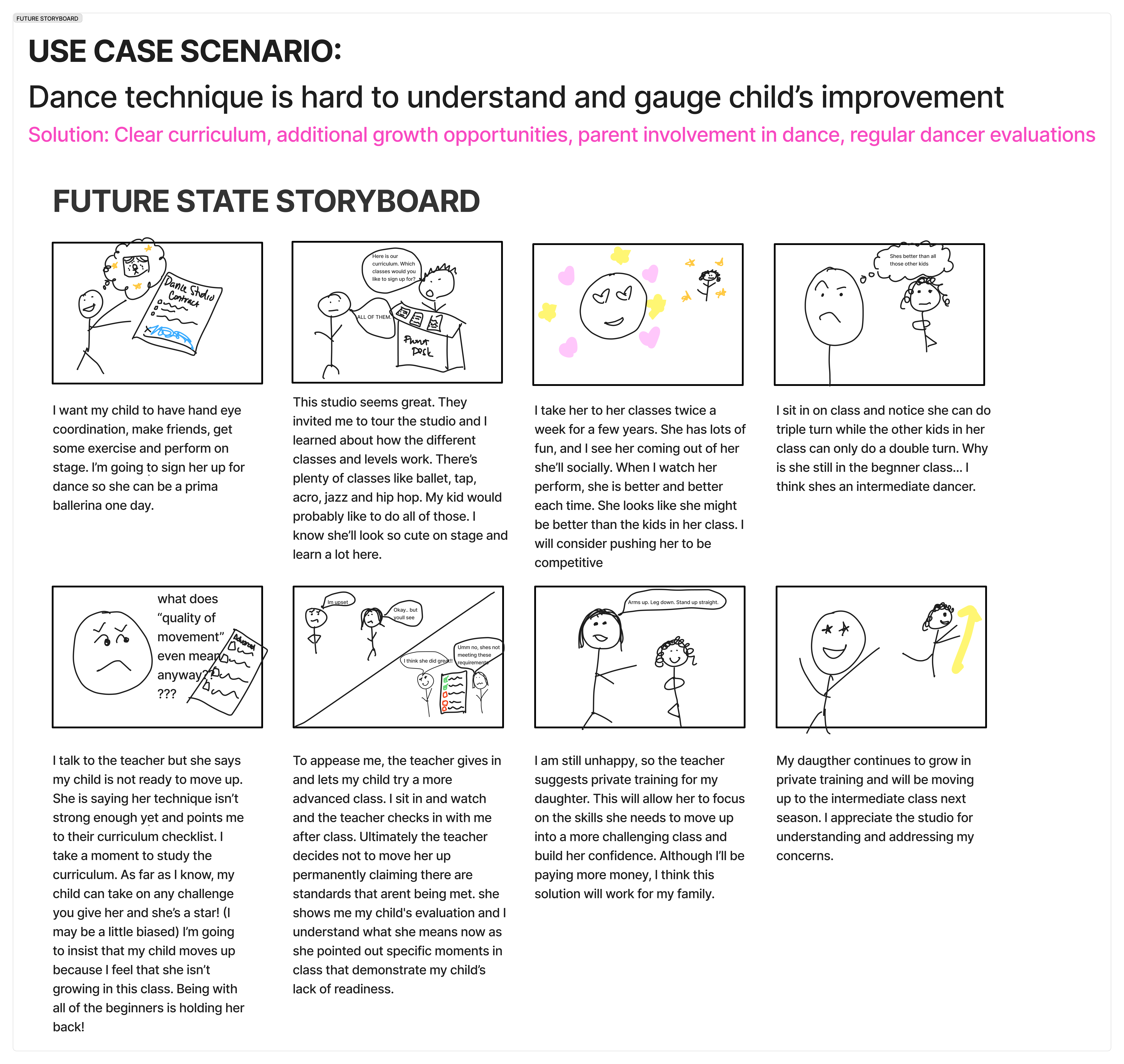
Understanding Technique
Parents want their children to grow and thrive at dance, and to do so they must know:
- Vocabulary
- Success Metrics
- Curriculum
- Teaching Strategies
- Baseline Measurements
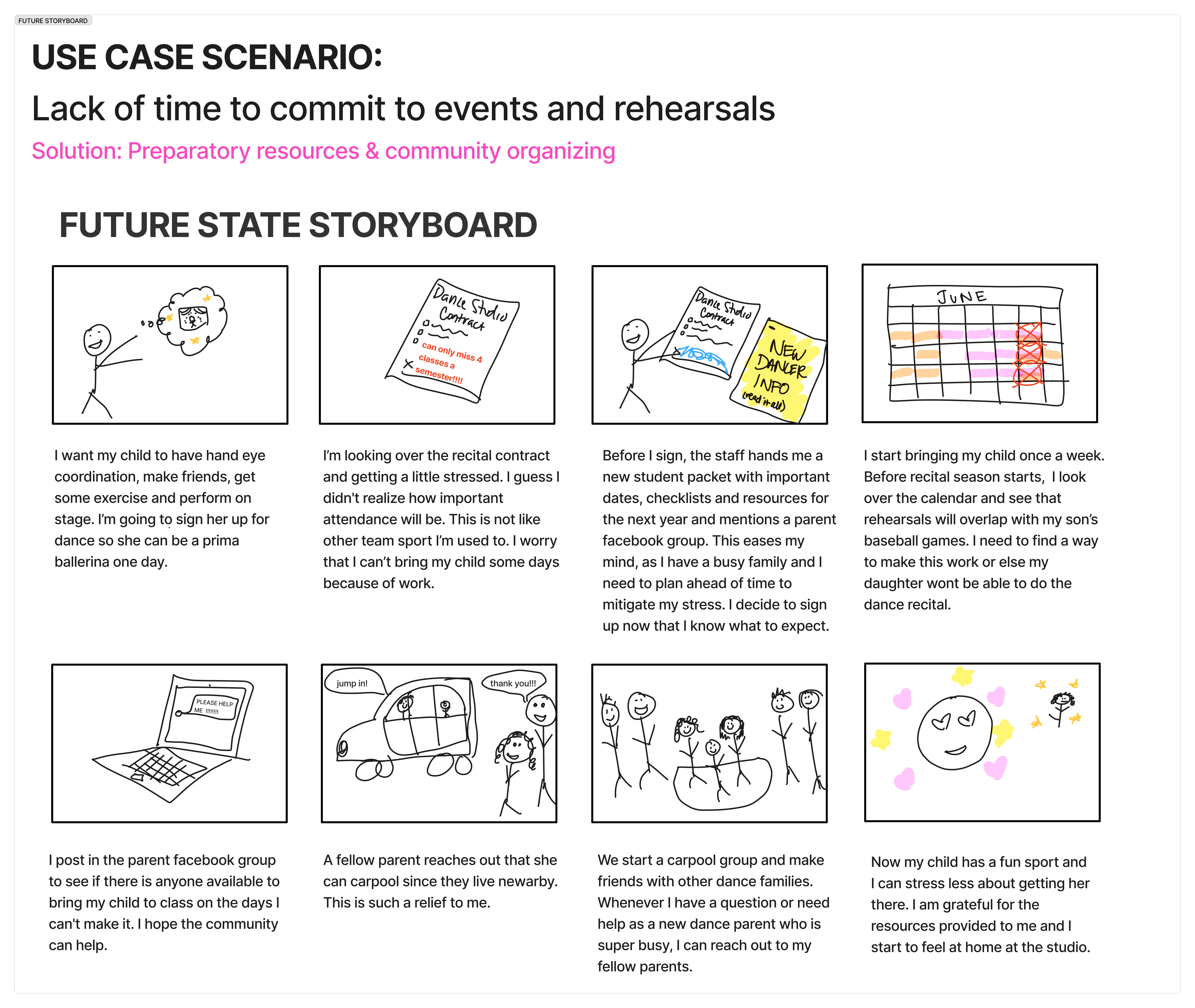
Time Commitment
When parents are stressed or feel the weight of a large time commitment looming, they need:
- Preparation / Advance Notice
- Logistical Assistance
- Flexibility
- Connection
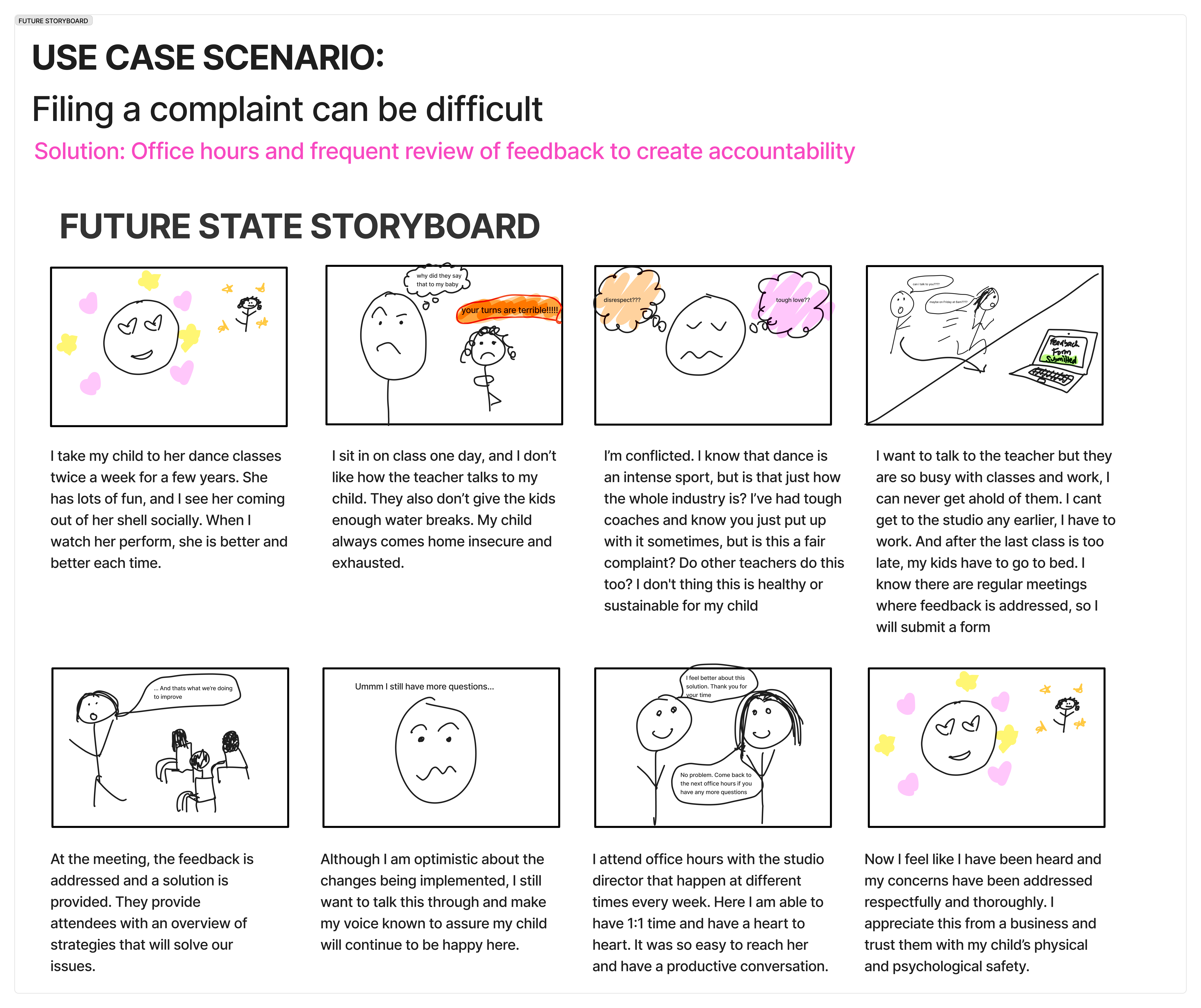
Feedback and Complaints
When parents are unhappy, they need to be able to voice their opinion and have it be heard with:
- Care and Consideration
- Prompt Change
- Respect
- Psychological Safety
Designing Solutions
Ideation with Storyboards
Near-term Recommendations
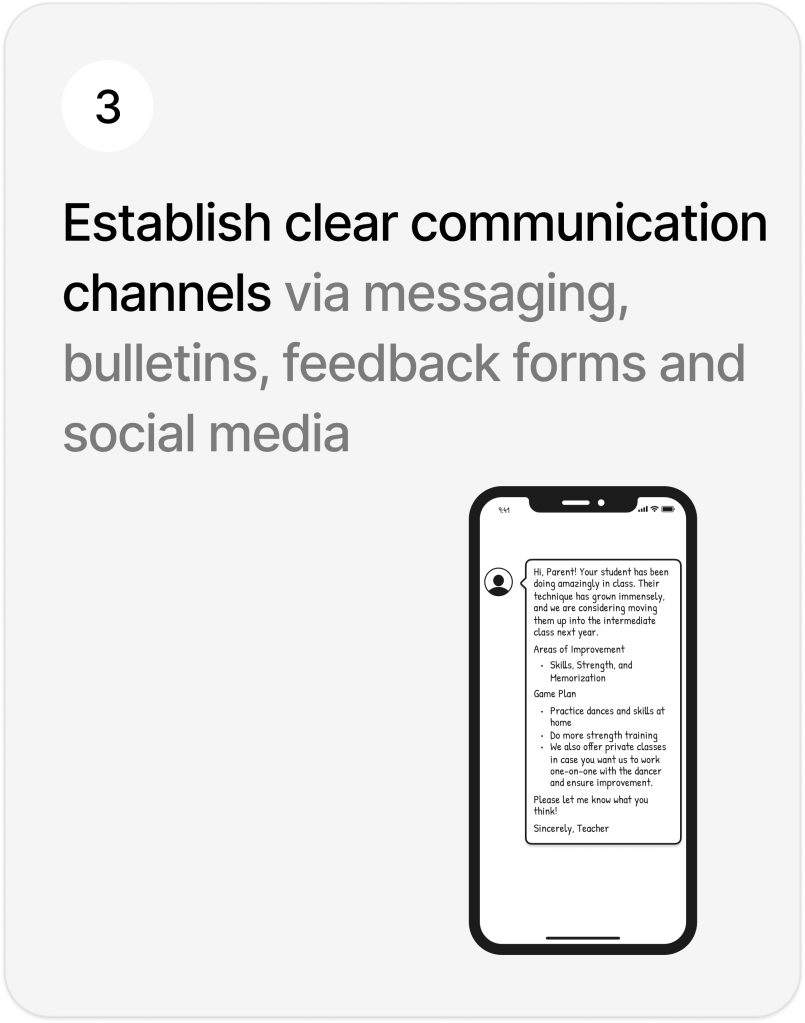
Take a peek at this presentation for more notes, details, and long term ideas for the Dance Education System.
Reflections
While casting such broad nets to encompass all components of a system there is a lot of room to get too far into various user pathways and over-anticipate solutions that creep out of scope.
When I found myself overwhelmed with options, I relied on various prioritization techniques.
Thanks to Morgan Denner for leading this class on System Design, opening my eyes to the vast world of systems design and providing guidance throughout the course. Additional thanks to Santa Fe Springs Dance Center staff and families for teaching me everything I know about dance and providing valuable insight into the dance education experience.

